Cameron Long · 11 November 2026
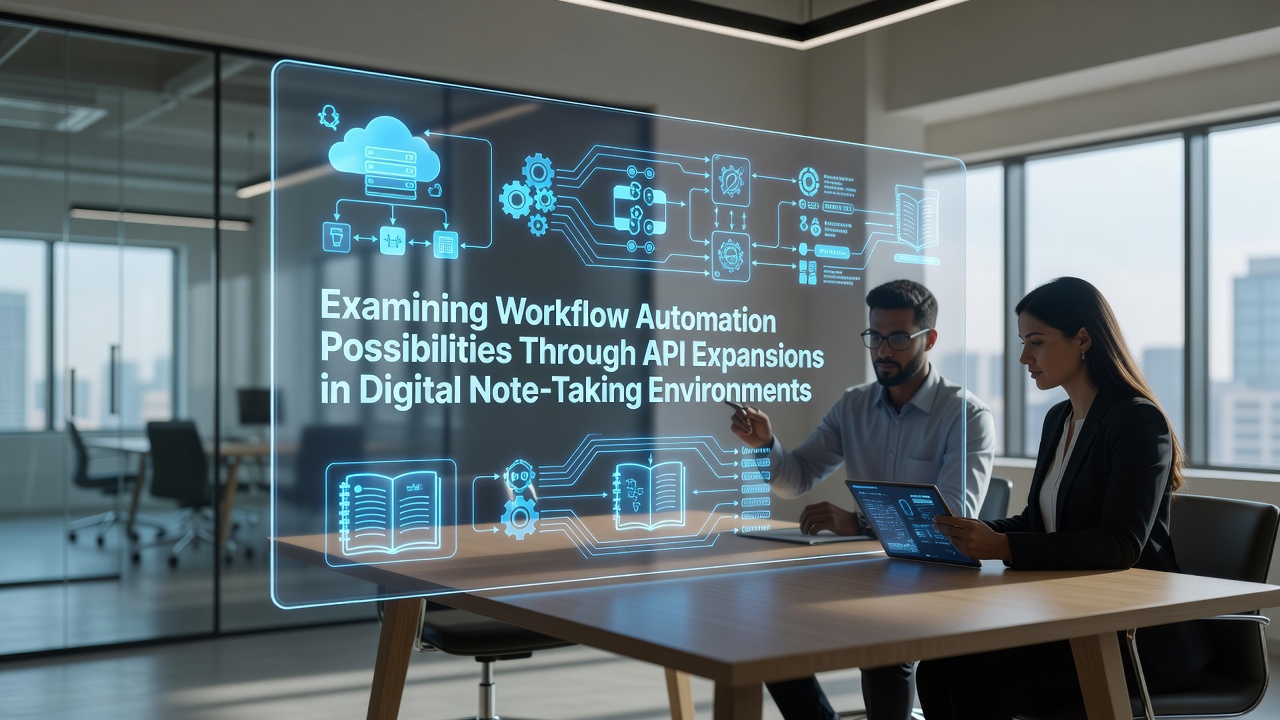
Examining Workflow Automation Possibilities Through API Expansions in Digital Note-Taking Environments
Digital note-taking platforms have expanded their application programming interfaces in recent years, and these developments open pathways for automated workflows that connect notes with task management systems, calendars, and data analytics tools. Researchers at several universities have documented how expanded API access allows users to trigger actions directly from tagged entries, while data from industry reports shows increased adoption rates among professional teams in 2025 and into 2026. One study from a Canadian research institution tracked integration patterns across platforms and found that organizations using expanded endpoints reduced manual data transfers by measurable percentages. API expansions typically include endpoints for creating, updating, and querying notes, along with webhooks that notify external services when changes occur. These features support sequences where a new note tagged with a project identifier automatically generates a corresponding task in a separate system or schedules a follow-up event. Observers note that platforms such as Notion and Evernote have released additional methods for handling attachments and metadata, which in turn enables more precise filtering before automation rules execute.Current API Capabilities in Leading Platforms
Leading note-taking services now expose methods that handle bulk operations and real-time synchronization, and these additions build on earlier read-only access models. Data indicates that synchronization calls can pull structured information from notes into spreadsheets or customer relationship management databases without intermediate file exports. Teams in November 2026 continue to test new webhook configurations that respond to specific content changes, such as when a due date field updates inside a note.
Integration examples include connections between note content and email services, where keywords detected through API queries initiate message sends to predefined recipients. Another common pattern links note updates to project tracking boards, so status changes propagate automatically across tools. Figures from a European research consortium reveal that such connections appear most frequently in sectors handling frequent documentation updates, including legal services and product development groups.
Automation Sequences Enabled by Expanded Endpoints
Expanded endpoints support multi-step sequences that begin with note creation and end with actions in unrelated applications. For instance, a note containing meeting minutes can feed extracted action items into a task queue, while the same note simultaneously updates a shared calendar entry. Researchers who examined these patterns across multiple deployments report that error rates drop when validation occurs through API checks rather than manual review.

Additional possibilities arise when platforms add support for custom fields and relational data within notes. These structures allow queries that return subsets of information based on complex criteria, and external services can then act on those results. One documented case involved an academic department that routed annotated research notes through an API to a citation manager, which then generated formatted bibliographies on demand. Similar approaches appear in corporate settings where compliance documentation moves from notes into audit logs without direct user intervention.
Security and Data Handling Considerations
API expansions also introduce requirements for authentication scopes and permission controls that limit which external systems can access note content. Standards developed by organizations such as the National Institute of Standards and Technology provide frameworks that many platforms reference when designing access tokens. Data handling protocols often specify encryption requirements for transit and at rest, and these measures apply equally to automated transfers initiated through APIs.
Monitoring tools that track API usage help administrators identify unusual patterns, while rate limiting prevents excessive calls that could strain platform resources. Reports from an Australian university research group detail how organizations combine logging with anomaly detection to maintain oversight of automated workflows. In practice, these safeguards allow teams to scale integrations without exposing sensitive entries to unintended recipients.
Future Directions for November 2026 and Beyond
Platform providers have announced further endpoint additions scheduled for release cycles around November 2026, including enhanced support for batch processing and improved webhook reliability. These updates are expected to facilitate connections with emerging analytics services that process note metadata for trend identification. Industry observers point to ongoing work on standardized schemas that would simplify cross-platform automation without requiring custom code for each integration.
Developers testing preview versions report that new query parameters allow finer control over returned data, reducing payload sizes and improving response times. Such refinements support more responsive automation that reacts quickly to note modifications. Continued expansion of these capabilities aligns with broader trends toward interconnected productivity environments where note-taking serves as a central data hub.
Conclusion
Expanded APIs in digital note-taking environments create concrete opportunities for workflow automation that link notes with external services through defined endpoints and event notifications. Evidence from multiple studies and deployment reports shows measurable efficiency gains when organizations implement these connections with appropriate security controls. As platforms continue releasing additional methods and refining existing ones, the range of possible automated sequences grows accordingly, and November 2026 marks another point in this ongoing development cycle.