Erik Long · 28 October 2026
How Encryption Protocols Influence Data Migration Choices in Niche Annotation Platforms
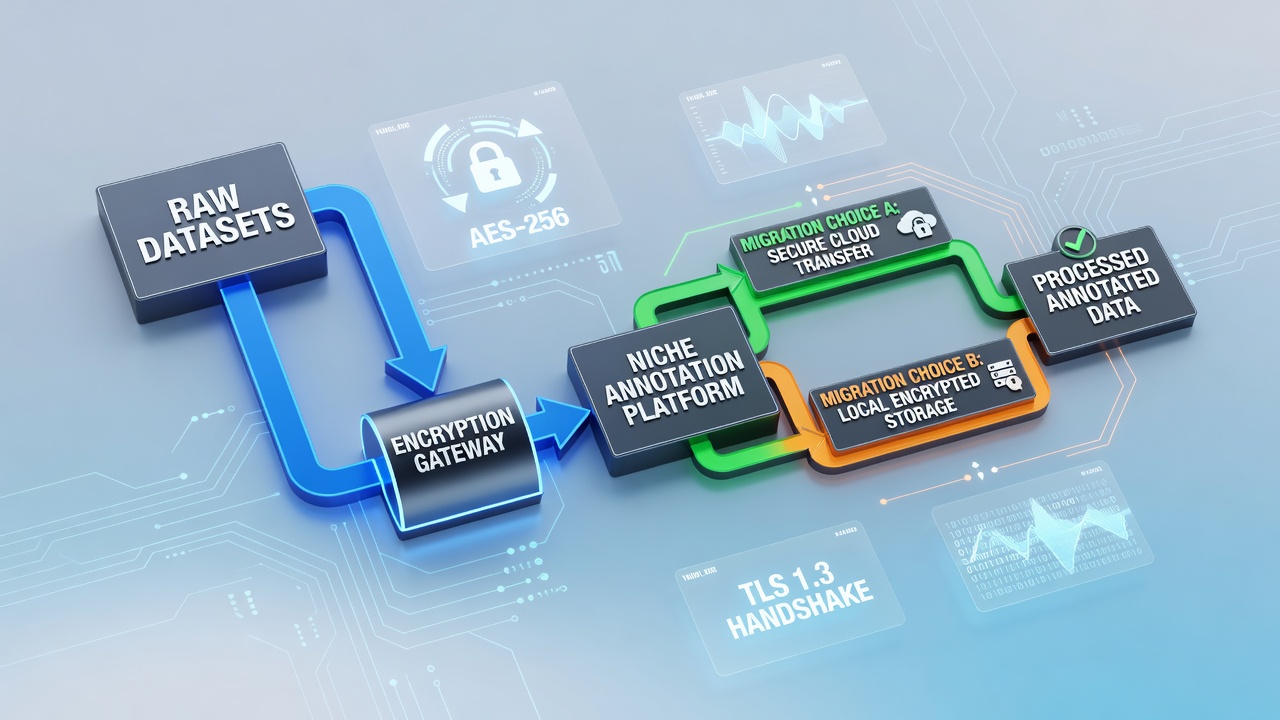
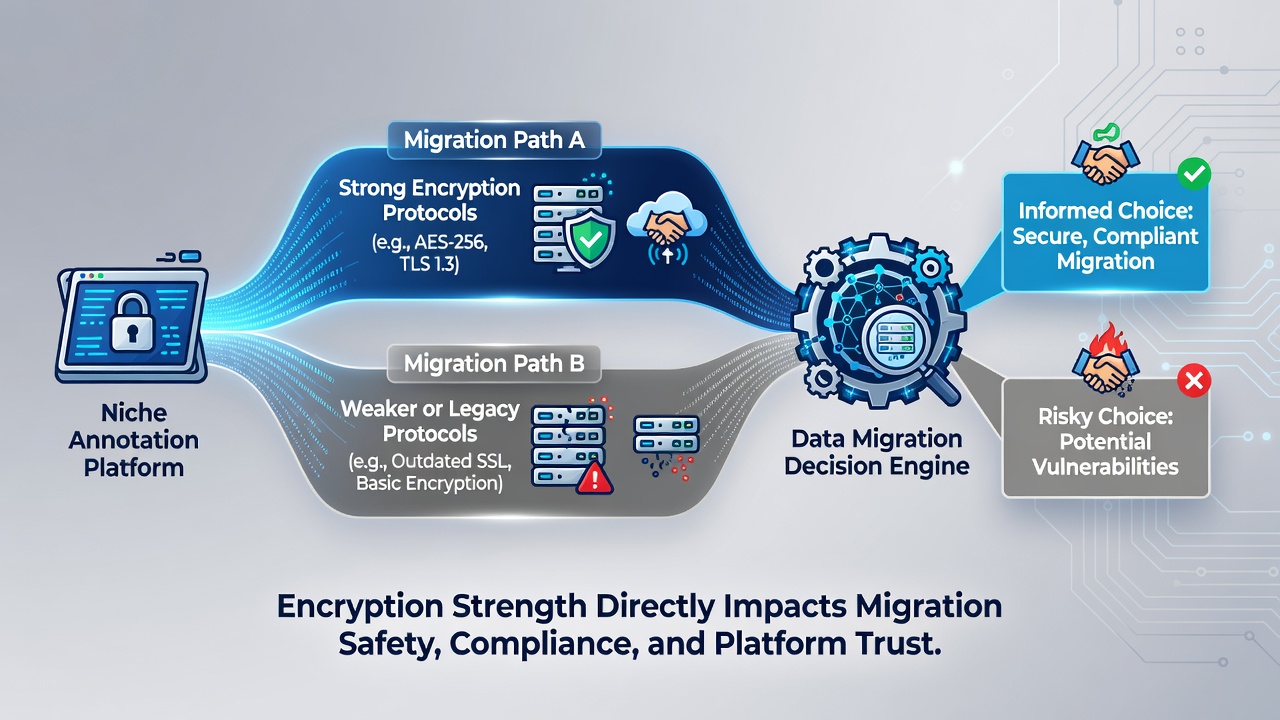
Niche annotation platforms handle specialized datasets for machine learning tasks such as medical imaging labels or geospatial tagging, and these systems rely on encryption protocols that directly shape how teams plan data transfers between storage environments. Protocols like AES-256 for at-rest protection and TLS 1.3 for transit security create compatibility requirements that determine whether a migration stays within one vendor ecosystem or moves to a hybrid setup. Observers note that platforms processing regulated information often select migration paths based on whether the target infrastructure supports the same key management standards already in use. Data indicates that end-to-end encryption adds extra steps during export and import operations because keys must travel separately from the encrypted payloads, which lengthens timelines and raises costs for teams handling large annotation volumes. Researchers discovered that some platforms adopt homomorphic encryption options precisely because these allow computations on encrypted data without full decryption at the destination, reducing exposure windows during transfers. Those who've studied migration logs find that platforms using older RSA-based key exchanges encounter more friction when shifting to cloud providers that prioritize post-quantum algorithms.Protocol Compatibility and Transfer Mechanics
Encryption standards affect file format choices and chunking strategies during migration, since certain annotation tools store metadata alongside encrypted content in structures that newer protocols cannot parse without custom converters. One study revealed that platforms migrating from on-premises servers to distributed environments frequently test protocol handshakes in advance because mismatched cipher suites can halt bulk transfers mid-process. Data shows that annotation teams working with time-sensitive projects schedule migrations around protocol update windows to avoid temporary downgrades in security levels.
What's interesting is how zero-knowledge proofs integrated into some encryption frameworks let platforms verify data integrity after migration without revealing the underlying annotation contents to the receiving system. This capability influences decisions about whether to use direct database replication or staged file-based exports. Figures from industry reports highlight that platforms handling multi-region datasets weigh these verification methods against latency increases that arise when proofs must cross international boundaries.
Regulatory Pressures Shaping Migration Routes
Compliance frameworks require specific encryption strengths that narrow the list of viable destination platforms during migration planning, and teams must audit key rotation policies at both source and target before committing to a move. According to NIST post-quantum cryptography guidelines, organizations preparing for upcoming algorithm transitions often choose migration targets that already demonstrate readiness for lattice-based schemes. In October 2026 several annotation platforms began piloting these newer standards in controlled environments, allowing teams to evaluate performance impacts on large-scale label exports without full production risk.
Platforms in the European Union face additional constraints from data residency rules that tie encryption key storage locations to migration feasibility, prompting some operators to keep keys within certified regions even when compute resources move elsewhere. Research from academic groups shows that these geographic requirements lead to hybrid migration models where encrypted annotation archives travel to new hosts while key management services remain fixed. Observers note that such splits increase operational complexity yet preserve audit trails demanded by regulators.
Performance Trade-offs During Large-Scale Moves
Encryption overhead influences whether platforms opt for incremental migrations or complete cutovers because high-throughput annotation workloads suffer noticeable slowdowns when every record undergoes re-encryption at the destination. Teams managing video frame annotations report that streaming transfers using authenticated encryption modes maintain better throughput than batch methods that require full file decryption before re-encryption. Evidence suggests that platforms with frequent schema changes during annotation projects prefer migration tools that preserve encryption context across format conversions.
But here's the thing: some niche platforms discover that adopting containerized key management solutions simplifies future migrations because the encryption layer travels with the application rather than remaining tied to specific hardware security modules. This approach reduces vendor lock-in yet demands upfront investment in standardized interfaces. Data from platform logs indicates that organizations completing such transitions experience fewer interruptions when subsequent migrations become necessary.
Future Protocol Developments and Platform Planning
Emerging standards around quantum-resistant encryption prompt many annotation platforms to model migration scenarios that account for algorithm agility, allowing swaps without full data reprocessing. Those evaluating long-term roadmaps examine how current protocol choices will support or hinder adoption of these standards. Researchers discovered that platforms already using flexible cipher suite negotiation face fewer barriers when testing new migration pathways that incorporate updated security primitives.
Conclusion
Encryption protocols determine the technical boundaries and compliance pathways available during data migration for niche annotation platforms, guiding choices around timing, tooling, and destination infrastructure. As standards evolve and regulatory expectations shift, platforms continue to align their migration strategies with protocol capabilities that protect sensitive annotation data throughout the transfer process.