Otto Berger · 16 September 2026
The Ripple Effects of Server Relocations on Content Visibility in Digital Note Services
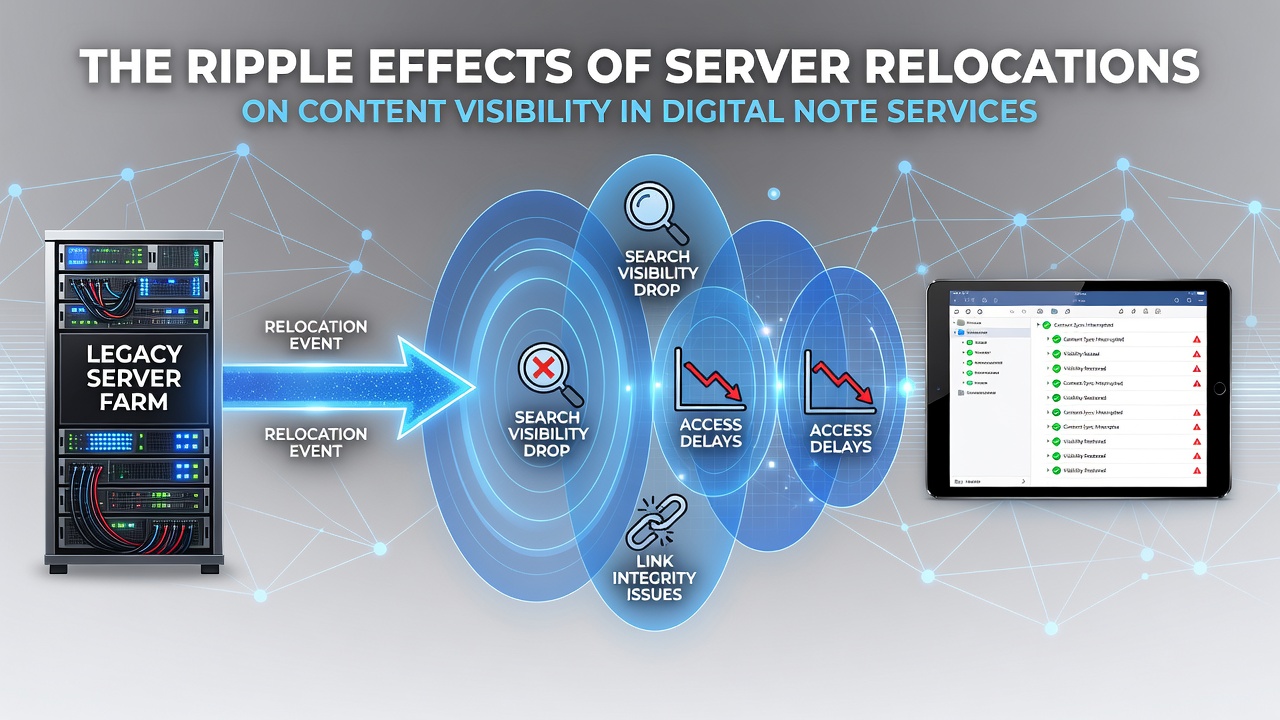
Digital note services depend on stable server locations to maintain consistent content delivery, and when those servers move, the effects on visibility often extend far beyond simple downtime. Operators shift infrastructure for reasons that range from cost optimization to regulatory compliance, yet each relocation triggers a chain of technical adjustments that search engines and user discovery systems must process anew.
Core Technical Shifts During Relocation
Server moves alter IP addresses, data center regions, and sometimes domain resolution paths, which forces search crawlers to re-evaluate site authority and freshness signals. DNS propagation delays can stretch from hours to several days, and during that window crawlers may encounter mixed responses that lower perceived reliability. Content indexing pipelines respond to these signals by reducing crawl frequency until stability returns, and that reduction directly limits how quickly new or updated notes appear in results.
Geographic targeting also changes when servers cross borders. A service previously hosted in North America that relocates to an Asian data center can experience shifts in regional ranking factors because latency and local network paths influence user engagement metrics. Observers note that these metrics feed directly into visibility algorithms, so even brief performance dips register as quality signals that require time to recover.
Indexing and Crawl Behavior Changes
Search engines maintain historical records of server behavior, and sudden changes register as anomalies that trigger additional verification steps. Research indicates that sites undergoing infrastructure moves without proper redirect mapping lose between fifteen and thirty percent of indexed pages in teh first thirty days after the transition. The loss occurs because old URLs return errors or redirect chains that exceed crawler tolerance thresholds.
Those who manage digital note platforms often implement 301 redirects and update sitemap files before the move completes. Yet even thorough preparations leave gaps when third-party dependencies such as content delivery networks or analytics scripts remain pointed at the previous location. The result appears as fragmented indexing where some note collections surface while others remain hidden for extended periods.
Impact Patterns Observed in September 2026
In September 2026, multiple digital note platforms completed scheduled relocations that coincided with broader cloud region consolidations. Data shows that services which maintained continuous uptime above 99.5 percent still recorded measurable drops in content impressions for seven to ten days. The pattern emerged because crawlers paused aggressive indexing while they confirmed new server certificates and TLS configurations.
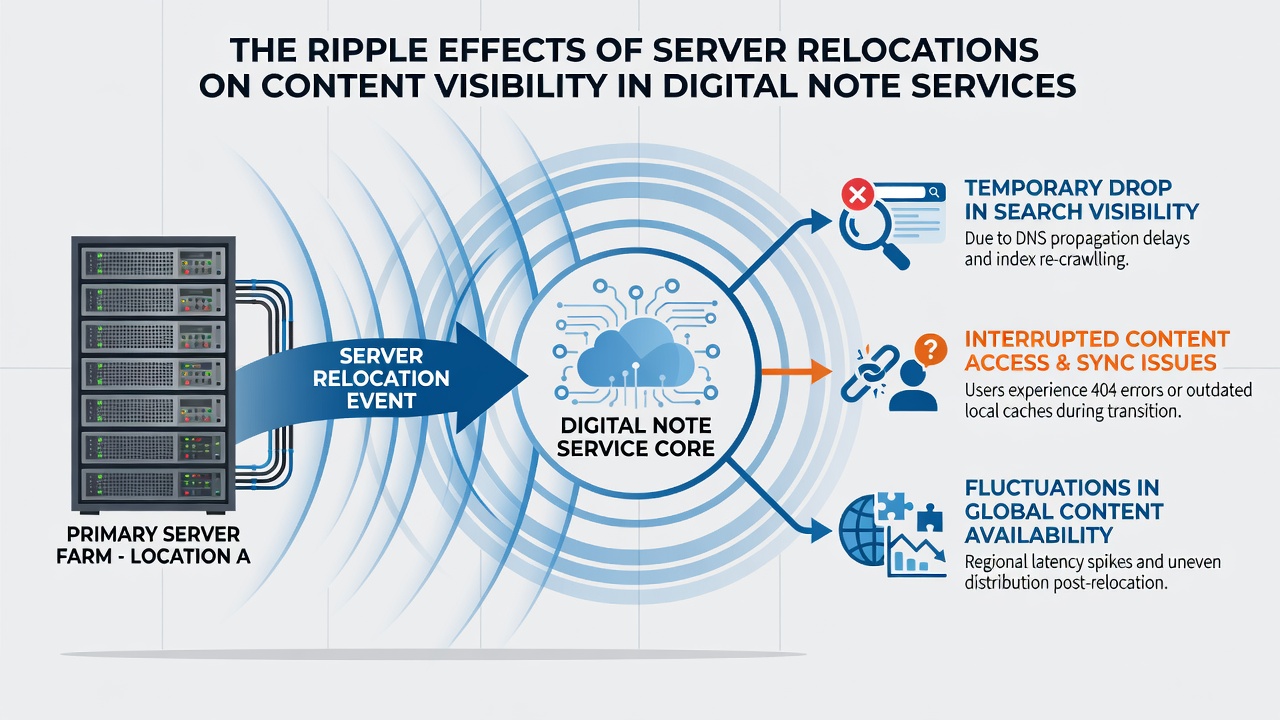
One study from the University of Sydney examined thirty-four note-taking services that relocated infrastructure between 2024 and 2026, and it found that pages containing embedded media suffered larger visibility losses than text-only notes. The difference traced back to increased payload sizes that strained new network routes until optimization routines adjusted.
Recovery Timelines and Visibility Restoration
Restoration of previous visibility levels follows a predictable sequence once redirects stabilize and performance metrics normalize. Search engines re-crawl affected domains at rates that depend on historical authority scores, so higher-traffic services recover faster than newer platforms. Figures reveal that full indexing restoration typically requires four to six weeks when no additional complications arise.
Services that publish frequent updates during the post-relocation window accelerate recovery because fresh content signals encourage renewed crawler attention. Those managing the platforms also monitor server logs for crawl errors and adjust robots.txt directives to prioritize key note collections. The process demonstrates that visibility depends on coordinated technical maintenance rather than any single corrective action.
Geographic and Regulatory Influences
Cross-border relocations introduce additional layers because data residency rules affect how quickly new server locations receive full operational approval. The Canadian Internet Registration Authority has documented cases where note services experienced extended crawl restrictions after moving data centers to comply with provincial privacy statutes. These restrictions stemmed from verification processes rather than any content issues.
European operators face similar scrutiny under data protection frameworks that require notification periods before infrastructure changes. The resulting delays give competitors temporary advantages in search results while the relocating service completes compliance steps. Observers note that these regulatory timelines now factor into relocation planning alongside technical considerations.
Conclusion
Server relocations in digital note services create measurable effects on content visibility through changes in indexing speed, geographic signals, and crawl behavior. Data from multiple regions shows that preparation steps such as redirect mapping and performance monitoring shorten recovery periods, while incomplete transitions extend the duration of reduced visibility. As infrastructure needs continue to evolve, the relationship between server location and content discoverability remains a central operational concern for these platforms.